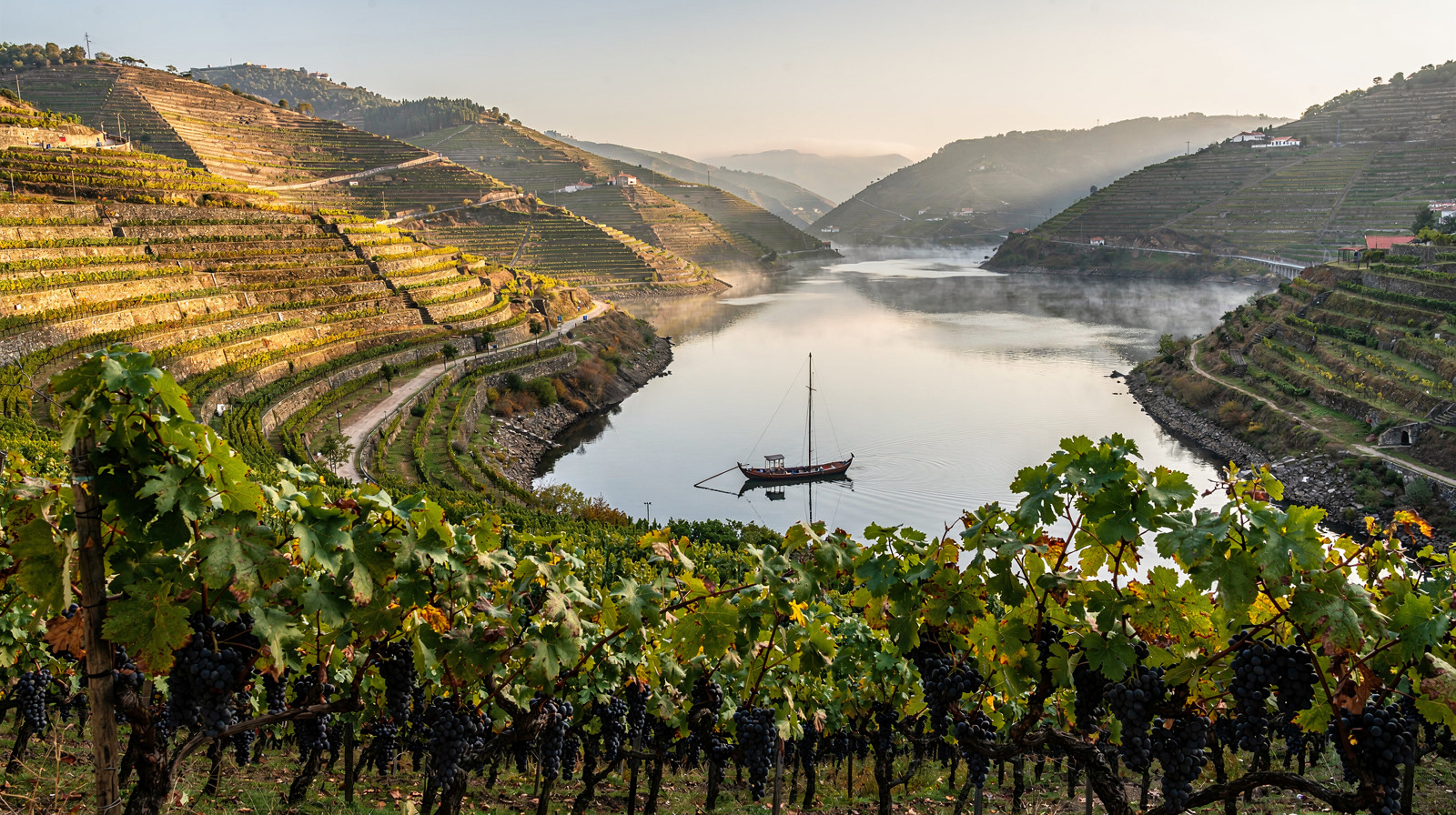
For eleven months of the year, the Douro Valley is a landscape you look at: two thousand kilometres of dry-stone terraces stacked up impossible slopes, a green river turning between them, port lodges dozing in the heat. Then September arrives and the whole valley goes to work. This is the vindima — the grape harvest in the world’s oldest demarcated wine region — and for a few weeks visitors can stop being spectators. You can cut grapes on the terraces alongside the picking crews, eat the harvest lunch with them, and in the evening climb into a granite lagar and tread the day’s fruit with your own feet, exactly as it has been done here for three centuries.
What September actually looks like
The picking runs roughly from the second week of September into early October, and the valley leans into it. Lamego throws its harvest festival on 11–13 September; the Festa da Vindima do Douro follows on the 18th–20th. The Portugal Guides’ vindima overview explains the season’s shape — and the catch, which is that each quinta confirms its own picking dates only weeks in advance, because the grapes decide, not the calendar. Wine Tourism Portugal’s harvest guide covers which estates run structured programmes, from Quinta da Pacheca to Sandeman’s Quinta do Seixo.
The experiences themselves are more affordable than the setting suggests. Ola Daniela’s comparison of Portugal’s harvest experiences lists real 2026 prices: €150 at Quinta da Pacheca for a morning’s picking, foot treading, buffet lunch and tasting; €189 at Quinta da Vacaria; €304 for Quinta Nova’s grander version. If you’re basing yourself in Porto, Living Tours’ harvest day trip packs picking, stomping and a long regional lunch into a single seven-hour outing, with a pick-up option at Pinhão station.
The train, the road, the river
Getting to the vindima is genuinely half the pleasure, because the Linha do Douro is the most beautiful railway in Portugal — the track runs so close to the river that the water fills the window for the final hour into Pinhão. The Man in Seat 61’s guide has the details that matter: €12.20 each way from Porto, five or six departures a day, sit on the right going upstream, and tickets never sell out, so you can decide over breakfast.
Drivers get the N222 instead — the riverside stretch between Peso da Régua and Pinhão that regularly tops “world’s best road” lists. This road-trip guide written by a Douro native suggests the sensible trick: drive one way, put the car on the train back, and nobody has to skip the tastings. On the water, a traditional rabelo boat cruise from Pinhão to Tua — the flat-bottomed boats that once hauled port barrels downstream — takes just under two hours through the terraces, from €30. And build in time for the miradouros: Portoalities’ viewpoint guide maps twelve of them, including São Leonardo de Galafura, where a Miguel Torga poem is carved into the stone at the 640-metre summit, and Casal de Loivos above Pinhão, best claimed early before the parking descends into chaos.
Choosing your quintas
The estates differ more than their postcards do, so pick deliberately. Quinta do Crasto, on its rock spur above the river, runs ninety-minute visits ending in a five-wine tasting, plus wine dinners capped at twenty guests — everything by advance booking. Earth Trekkers’ first-hand comparison of eight quintas is useful for weighing the rest: Quinta do Tedo for intimacy, Quinta do Seixo for the architecture, Quinta de la Rosa for lunch above the water. For the overall shape of a visit, The Wine Scribes’ three-day itinerary builds a sane plan around Pinhão, and Julie Dawn Fox’s Douro guide — written by a long-time Portugal resident — is the best single orientation to bases, seasons and transport. Car-free travellers should read this three-day itinerary done entirely by train, boat and foot, which includes a walk through the vines from Provesende down to Pinhão.
Eating between tastings
The valley’s food is farm cooking that happens to overlook a masterpiece. Taste Porto’s tried-and-tested restaurant picks skip the tour-bus stops for the places locals actually book — Veladouro’s grilled meats in Pinhão, Mercearia do Viking’s petiscos. At the other end of the scale, DOC puts chef Rui Paula’s tasting menus on a deck built out over the river at Folgosa, halfway along the N222 — the kind of lunch that quietly absorbs an entire afternoon.
A barrel to sleep in
The Douro’s beds are half the story. Quinta da Pacheca, working since 1738, put ten giant wine barrels among its vines and turned them into suites — round windows, private decks, vineyard on all sides — alongside the manor house rooms and a spa that uses the grapes. At the top end, Six Senses Douro Valley fills a nineteenth-century manor above the river at Samodães with 71 rooms, a wine library and a spa given to underwater sound therapy. Everything near Pinhão books out for the harvest weeks six to eight weeks ahead — which, if you’re reading this in mid-August, means now. The broader context — where the valley’s bases sit and how they connect — is laid out well in Porto North Portugal’s independent Douro guide.
Press play before the flight
A three-minute primer on why port made this valley, and a fuller tour of what a visit looks like:
Douro Valley, Portugal: Tasting Port Wine - Rick Steves' Europe
Rick Steves' Europe
Douro Valley Complete Travel Guide | Portugal
Living The Globe
The lagares fill in five weeks, and the barrel rooms go first. The €150 harvest mornings, the Seat 61 train plan, the N222 stops, the rabelo cruise and both wine hotels are gathered in our Douro Valley collection — save it, book your picking date before the quintas confirm theirs, and come home with purple-stained ankles.
Curated using Epic Itineraries. Log in to save this collection to your own plan.