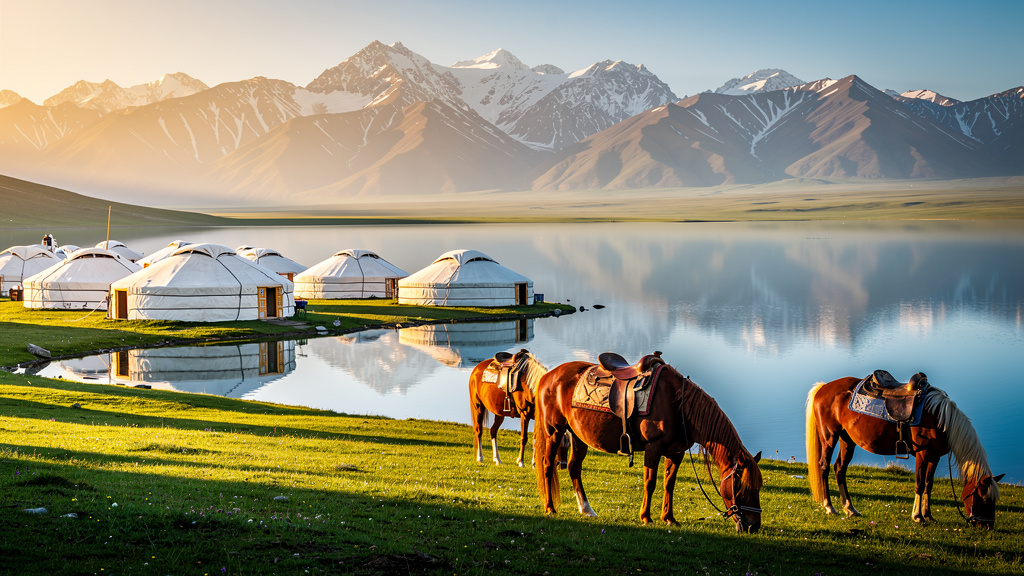
For most of the year, the high country of Kyrgyzstan is shut. The passes are under snow, the alpine lakes are frozen, and the great summer pastures — the jailoo — are empty. Then, for a few short weeks from July, the whole of it opens at once. The shepherds drive their herds up to the high meadows and raise their felt yurts beside the lakes, the 3,500-metre passes clear, and a country that is ninety per cent mountains becomes, briefly, one of the most rewarding places on earth to walk a horse across. This is the window, and 2026 is the year the rest of the world has noticed: American Express named Kyrgyzstan the fastest-growing summer destination on its books, up around 135 per cent year on year.
It helps that it is genuinely affordable and genuinely off-beat — independent travellers get by on $30–70 a day — and that 2026 is a World Nomad Games year, with the eagle hunters and horseback wrestlers gathering at Issyk-Köl from 31 August. Journal of Nomads’ itinerary, refreshed for this season, is the planning backbone; a detailed two-week loop and the official two-week route fill in the alternatives.
Sleeping by Song-Köl
If you do one thing here, do this. Song-Köl is an alpine lake at just over 3,000 metres, ringed by summer pasture and reached on a two-to-three-day horse trek from Kochkor or Kyzart. You ride up through the jailoo, sleep in a shepherd’s yurt, eat what the family eats, and drink kymyz — fermented mare’s milk — whether you mean to or not. Journal of Nomads’ horse-riding guide to Song-Köl is the definitive account of the routes and yurt life; this complete horse-trek guide covers the practicalities. For where exactly to lay your head, this Song-Köl yurt-stay guide compares the community-tourism camps against the shepherd setups — reckon on roughly $60–80 a night, all meals in. Bring layers: even in July the nights up here are cold.
The Ala-Köl trek and Karakol
The country’s other great walk starts at Karakol, on the eastern shore of Issyk-Köl. The Ala-Köl trek climbs to a turquoise glacial lake at around 3,500 metres, crosses a pass close to 3,900, and drops to the Altyn-Arashan hot springs — the full Karakol–Ala-Köl–Altyn-Arashan route runs about 55 kilometres over two or three days. This Ala-Köl and Altyn-Arashan guide is the best single account of the stages and the pass; a second complete trek guide and a step-by-step trail breakdown are worth reading before you commit — the weather up here can throw four seasons at you in a day. Karakol itself is worth a day either side: a Sunday animal bazaar where herders trade horses and sheep at dawn, and a wooden Dungan mosque built in 1907 without a single nail, painted like a Chinese temple. This guide to Karakol covers the town. It sits on Issyk-Köl, the world’s second-largest alpine lake — so vast and slightly saline that it never freezes, even ringed by snow peaks — and the warm southern shore makes an easy contrast to the cold of the passes.
Beyond the big two
Not every day needs a pass. Forty kilometres from the capital, Ala-Archa National Park is the perfect acclimatisation hike — a glacier and waterfall day out, now reachable by city bus. On the south shore of Issyk-Köl, Skazka, the “fairytale” canyon, is a short, surreal wander through wind-carved red rock, with the Jeti-Ögüz “Seven Bulls” cliffs and the warm-water resort strip strung along the same shore — a useful soft day between the harder treks. And on the road back to Bishkek stands the 10th-century Burana Tower, the lone minaret of a vanished Silk Road city, ringed by a field of stone balbals — Turkic grave markers carved with faces.
What you’ll eat
Kyrgyz food is mountain food, built for cold and distance. The national dish is beshbarmak — “five fingers”, hand-eaten boiled meat over wide noodles in an onion broth — alongside lagman, manti and, up on the jailoo, endless tea and kymyz. The standout regional plate is Karakol’s ashlan-fu, a cold, spicy Dungan noodle soup you can eat for under a dollar at the bazaar. This guide to Karakol’s specialities and a broader Kyrgyz food primer cover the canon; back in the capital, this guide to eating and drinking in Bishkek is the city counterpoint.
Yurts, homestays and a Bishkek base
Accommodation here is part of the experience. In Bishkek you’ll find normal hotels and hostels, but everywhere else the system runs on Community-Based Tourism — a network of family homestays and yurt camps that put your money straight into mountain households. This guide to CBT and shepherd-life stays explains how to book them and what to expect, from a bed in a family home to a felt yurt on the jailoo. Use Bishkek as your arrival-and-resupply base and spend the nights that matter up high.
On screen, before you arrive
Two films to set the scale of the place:
Kyrgyzstan: The Most Underrated Country in the World? — 4K Travel Documentary
TRUE GLOBE
Why You Should Travel to Kyrgyzstan — Karakol & Ala-Köl Lake
Elena's Travels
The logistics
Most trips begin in Bishkek; the seasonal FlyArystan link from Almaty to Issyk-Köl resumes on 18 June, which shortcuts the eastern lakeshore. From there the country runs on shared taxis (marshrutkas), CBT-arranged drivers and, for the high stuff, horses and your own feet. You don’t need a guide for the popular treks, but you do need to respect the altitude — build in the Ala-Archa day before you go high — and carry layers for genuine cold even at the height of summer.
The high passes are open now, and only until early September. Horse-trekking to a yurt on Song-Köl, the Ala-Köl lake and the Altyn-Arashan hot springs, an Ala-Archa acclimatisation hike, ashlan-fu in Karakol and the Nomad Games building toward late August — all gathered in our Kyrgyzstan collection. Save it, book the homestays, and go while the jailoo is still green and the yurts are still up.
Curated using Epic Itineraries. Log in to save this collection to your own plan.