
The ferry from Positano pulls into Salerno harbour just as the evening light turns the waterfront promenade a dusty gold. Couples stroll arm-in-arm. Teenagers kick a football between palm trees. An elderly man adjusts his newspaper, completely unbothered by the magnificent Norman cathedral rising behind him. This is what the Amalfi Coast looked like before Instagram discovered it — and it’s precisely why travellers are flocking here in record numbers.
Salerno topped Skyscanner’s 2026 trending destinations list with a staggering 211% increase in searches. That’s not a typo. While day-trippers pack into Positano’s narrow streets and Amalfi’s overpriced cafés, those in the know are settling into Salerno’s generous piazzas and discovering a city that feels genuinely, stubbornly Italian.
The anti-Positano argument
Let’s be honest about what you’re avoiding. The Amalfi Coast’s famous villages are spectacular — there’s a reason they became famous. But that fame has consequences: €18 Aperol Spritzes, restaurants where English menus outnumber Italian ones, and beaches so crowded you’ll pay €50 just for a lounger and umbrella.
Walks of Italy makes a compelling case for choosing Salerno over Sorrento as your base. The transport connections are actually better (ferries and buses to every coastal village, plus trains to Naples and Pompeii), accommodation costs roughly half as much, and you’re staying somewhere with its own identity rather than a pretty shell hollowed out for tourists.
That’s not to say Salerno is undiscovered — it’s a working city of 130,000 people with a university, a hospital, and rush-hour traffic. The difference is that the tourism infrastructure serves the coast while the city serves itself. When you eat dinner here, you’re eating where locals eat. When you walk the centro storico at night, you’re walking with families doing their evening passeggiata, not tour groups following umbrellas.
The old town and that cathedral
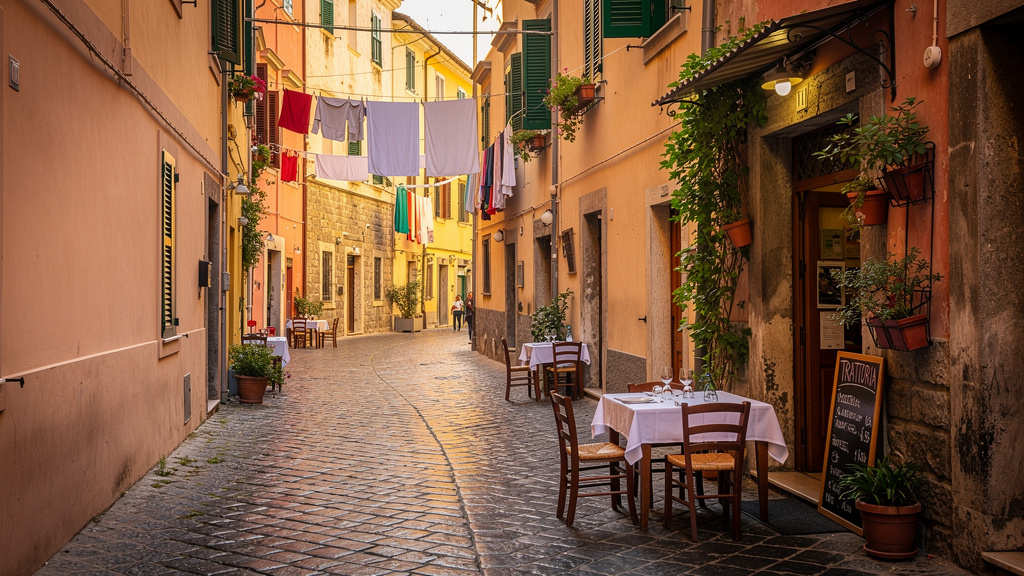
Salerno’s medieval quarter is a proper labyrinth. Narrow alleys twist between pastel buildings, occasionally opening into small piazzas with fountains that have been burbling since the Middle Ages. The self-guided walking tour from Nomads Travel Guide hits the essential landmarks, but the real pleasure is getting deliberately lost.
The Duomo di San Matteo demands attention. Built in the 11th century by Robert Guiscard (the Norman adventurer who conquered southern Italy), it’s an architectural palimpsest — Roman columns, Byzantine mosaics, Baroque additions, all somehow cohering into something magnificent. The crypt holds the remains of Saint Matthew the Evangelist, which makes this one of Christianity’s more significant pilgrimage sites. You wouldn’t know it from the relaxed atmosphere.
Adjacent to the cathedral, the Museo Diocesano houses medieval ivories that rival anything in the British Museum. The Giardino della Minerva, a terraced botanical garden established in the 14th century as part of the famous Salerno medical school, offers views across terracotta rooftops to the sea. Visit Italy’s local guide has good tips for experiencing these spots without the crowds — early morning for the garden, late afternoon for the cathedral when the light through the windows is extraordinary.
Where the street food scene gets serious
Southern Italian cuisine operates on different principles from what most visitors expect. Less refinement, more generosity. Fewer complicated preparations, better ingredients. Salerno exemplifies this beautifully.
Silly Suitcase’s street food guide is essential reading before you arrive. The frittura di paranza (mixed fried fish) served in paper cones at market stalls. The cuoppo — fried seafood and vegetables piled into another paper cone. Panini stuffed with milza (spleen, don’t knock it until you’ve tried it) or mozzarella di bufala so fresh it squeaks.
The Mercato di Via Piave is Salerno’s main market, and it’s gloriously chaotic. Fishmongers shouting prices, nonnas squeezing tomatoes, butchers with entire prosciutti hanging from hooks. Come hungry, leave full. The vendors are happy to assemble impromptu meals if you point at things that look good.
For sit-down dining, The Tour Guy’s restaurant recommendations lean toward local favourites rather than tourist traps. Vicolo della Neve serves traditional Campanian dishes in a candlelit cellar. Osteria Didone does seafood with an inventive twist. If you’re after something more formal, the Michelin guide lists several starred and recommended options — Re Maurì being perhaps the most acclaimed.
Using Salerno as a launchpad
The coast is the obvious draw. SITA buses and ferries connect Salerno to Amalfi, Positano, Ravello, and Minori throughout the day. The morning ferry is particularly lovely — watching the coastline unfold from the water as you skim past villages clinging to vertical cliffs. Go early, before the cruise ship passengers arrive, and you can have Ravello’s Villa Rufolo gardens almost to yourself.
But the day trips from Salerno extend well beyond the famous coast. Paestum, thirty minutes south, contains three Greek temples that rank among the best-preserved anywhere in the world. Earth Trekkers’ practical guide covers the logistics. Go late afternoon when the tour buses have left and the golden stone glows in the falling light. Bring a picnic. Sit on the grass and contemplate the fact that these columns have been standing since the 5th century BC.
Pompeii and Herculaneum are easily reachable by train — Pompeii gets the crowds, but Herculaneum is better preserved and more atmospheric. Naples is forty minutes by high-speed rail if you want pizza at its source. The Cilento coast, south of Salerno, has beaches that rival anything in the Mediterranean without the development that has swallowed much of the Amalfi shoreline.
Settling in properly
Santorini Dave’s hotel guide covers all budgets, from backpacker hostels to seafront boutique properties. The sweet spot seems to be mid-range B&Bs in the centro storico — converted historic buildings with character, breakfast included, and owners who will draw you maps of their favourite spots.
The Lungomare Trieste, Salerno’s long waterfront promenade, is where the city’s evening life happens. It’s worth booking accommodation within walking distance, so you can join the passeggiata without planning. Ice cream from one of the gelaterie. A spritz at a pavement café. Eventually, dinner somewhere the menu isn’t translated.
Live Salerno maintains excellent event listings and seasonal guides if you want to time your visit around festivals. The Luci d’Artista Christmas lights are becoming increasingly famous — the whole city centre transformed into an illuminated wonderland from November through January.
A practical itinerary
Italia.it’s official Salerno itinerary suggests two to three days for the city alone. Add the coast, Paestum, and perhaps a day trip to Naples, and you’ve got a week that covers extraordinary ground without ever feeling rushed.
My Wanderlusty Life’s comprehensive guide is worth bookmarking for the practical details — transport schedules, museum opening hours, neighbourhood recommendations. Touropia’s activity list leans more toward experiences than sights, which suits Salerno’s character. Lonely Planet’s destination page has reliable basics if you prefer a familiar format.
The 211% search increase means Salerno won’t stay quiet forever. The infrastructure is coming — more boutique hotels, more restaurants with English-speaking staff, inevitably more tour groups. Whether that’s progress or loss depends on your perspective. What’s certain is that right now, in this particular window, you can experience a genuine Italian coastal city that happens to be the gateway to one of the world’s most beautiful coastlines.
The ferry to Positano leaves from the harbour every morning. Most visitors take it. The smart ones take it back.
Ready to plan your Salerno escape? We’ve curated the best restaurants, day trips, and local experiences in our Salerno collection — save it to your itinerary and start exploring.